A Step in Time Structural Engineers
Structural Inspections for Fire and Water Damage
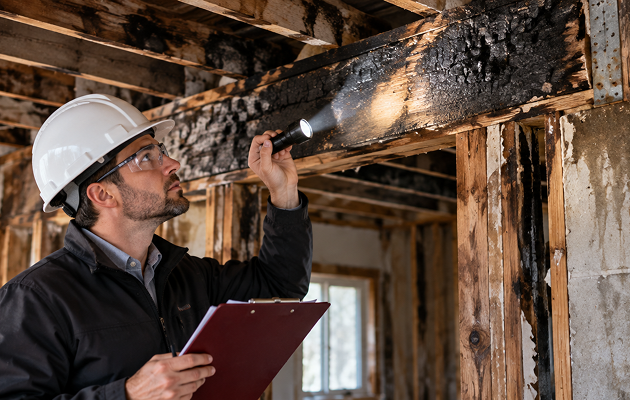
After a fire or significant water event, the visible damage is the part that gets addressed first. Structural damage from fire and water is different from what the surface shows, and it is the part that determines how the building needs to be repaired, what the claim requires, and whether the structure is in operable condition for continued use.
A Step in Time Structural Engineering provides fire and water damage structural inspections for homeowners, commercial property owners, and their representatives. Every assessment produces a PE-stamped engineering report documenting the full structural impact - not just what is visible.
What Fire Damage Does to Structural Elements
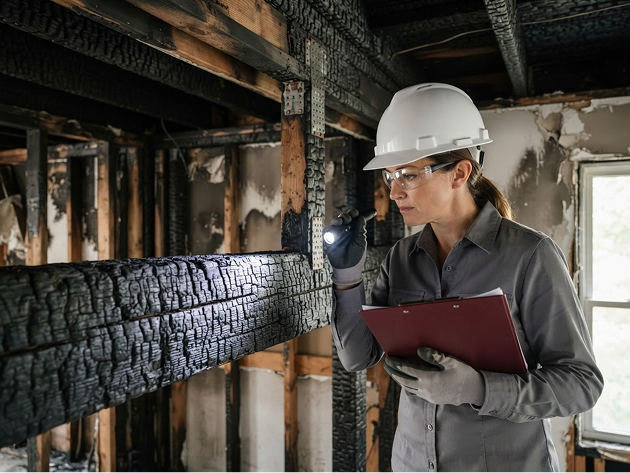
Heat causes structural damage to wood framing and steel connections before any visible charring occurs. Framing members weakened by heat exposure - but not visibly charred - can continue to carry load in a compromised condition. The actual extent of heat damage to structural members requires assessment, not just visual observation of burn marks.
Fire damage structural assessment from A Step in Time examines framing members in fire-affected areas for heat-related compromise beyond visible charring, load path integrity following fire damage in the structural system, connection conditions in areas exposed to high heat, and roof trusses and attic framing where fire frequently spreads before suppression.
What Water Damage Does to Structural Elements
Prolonged water exposure deteriorates wood framing through swelling, dimensional change, and eventual rot. It promotes mold growth in structural cavities. It corrodes metal connectors, fasteners, and embedded anchors. It can compromise masonry and concrete through saturation, freeze-thaw action, and chemical deterioration.
Water damage structural assessment from A Step in Time examines floor systems, joists, and subfloor for moisture-related deterioration, framing in walls and ceilings where water intrusion reached structural members, foundation walls and slab conditions following water intrusion or flooding, crawl space and basement framing where moisture-related structural deterioration commonly originates, and any structural element where prolonged moisture exposure may have compromised integrity.
What Gets Missed Without a Structural Assessment
Restoration companies and contractors address what they can see. Structural damage following fire or water events frequently extends beyond the visible zone.
Heat that weakened framing above a fire but below the burn line. Moisture that reached crawl space framing through a foundation crack. Rot in wall framing behind drywall that absorbed water during a roof leak. Foundation deterioration from months of water exposure that predated the visible interior damage.
Without a structural assessment, these conditions remain undocumented. The repair scope addresses the surface. The structural issue progresses.
Documentation for Claims
For fire and water damage claims involving structural elements, a PE-stamped engineering report provides documentation of the full structural impact including non-visible conditions, an engineering opinion on cause and extent, a professional scope of structural repair, and a record of pre-repair structural conditions in case of dispute.
Mr. Ray Gessner, PE is available for expert witness testimony in fire and water damage disputes and legal proceedings.
Frequently Asked Questions
Do I need a structural engineer after a house fire?
How is a structural assessment different from a restoration company's assessment?
Can you help if my fire or water damage claim is in dispute?
Schedule an Assessment
Fire and water damage structural assessments document what restoration companies and adjusters do not - the full structural impact of the event on the building's framing and connections.
A Step in Time Structural Engineering serves homeowners, attorneys, and contractors across Virginia and multiple states nationwide, including Maryland, Washington D.C., North Carolina, Florida, Georgia, New York, Texas, Massachusetts, and more
Ray Gessner, P.E. is licensed in Massachusetts, New York, Maryland, Washington D.C., Virginia, North Carolina, Tennessee, Georgia, Florida, Texas, Oregon, and Washington, Tennessee, Ohio, South Carolina, Louisiana, Iowa, Nevada, Nebraska, Mississippi, Arkansas, Colorado, Oklahoma, Kentucky, and South Dakota. The firm holds DPOR licenses as a Class A contractor, professional engineer, and engineering business entity, with offices in Virginia Beach, Sarasota (FL), and Panama City (FL).