A Step in Time Structural Engineers

Structural Engineering Assessments for Termite Damage
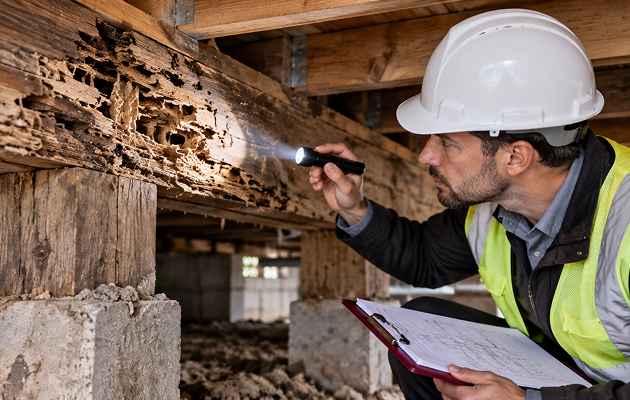
Termite damage is one of the most underestimated structural problems in Virginia homes. The damage is almost entirely concealed within wood members that appear intact from the outside. By the time visible signs appear, a significant amount of structural material may have been compromised.
A pest control company identifies and treats the infestation. A structural engineer determines what the damage has done to the framing, joists, sills, and connections that hold the structure together - and what the engineering requires to restore structural integrity correctly.
A Step in Time Structural Engineering provides independent structural assessments of termite damage for homeowners, attorneys, and real estate professionals across Virginia.
What Termite Damage Does to a Structure
Termites consume cellulose from the inside of wood members. The exterior of an affected joist, sill plate, or structural beam can appear visually normal while the interior is hollow. The member continues to carry load - until it does not.
The structural implications depend on which members are affected and how extensively. A compromised joist in a low-load area is a different engineering situation than a damaged sill plate under a load-bearing wall. Determining which situation applies, and what the engineering requires, is a structural assessment question rather than a pest control question.
Why a Structural Engineering Assessment Matters for Termite Damage
Identifying the full extent of structural compromise.
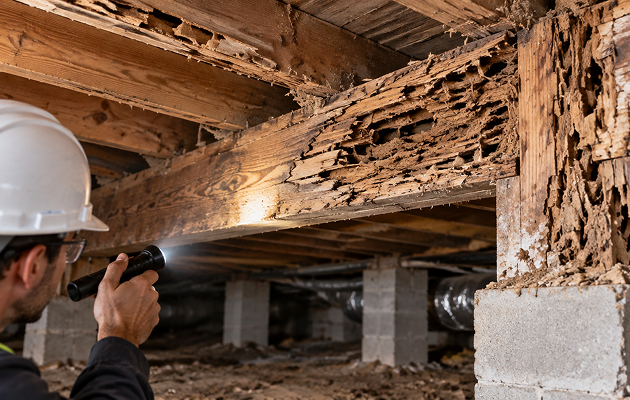
Termite damage does not respect property lines or visible boundaries. An assessment identifies all structurally compromised members, not just the ones immediately visible.
Specifying correct repairs.
Documentation for real estate transactions.
Documentation for insurance and legal purposes.
What We Look For
Our termite damage structural assessments examine all accessible structural members for evidence of termite activity and structural compromise. This includes:
- Floor joists and subfloor framing
- Sill plates and rim joists at the foundation level
- Structural posts and beams
- Stair stringers and connections
- Roof framing in accessible attic spaces
- Any structural member in areas identified by pest control as affected zones
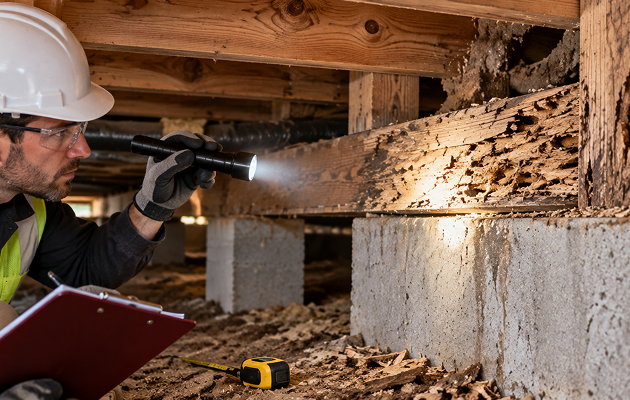
We document findings with photographs and produce a PE-stamped engineering report specifying the structural condition of each affected element and the engineering requirements for repair.
FAQs
Do I need a structural engineer for termite damage?
What is the difference between a pest control inspection and a structural engineering assessment for termite damage?
Can a contractor determine if termite repairs were done correctly?
A contractor can complete repairs and another contractor can look at them. A licensed structural engineer produces a PE-stamped engineering opinion on whether the repair method meets the applicable code requirements and adequately restores structural capacity. For significant structural repairs, engineering sign-off provides a level of professional confirmation a contractor assessment does not.
Termite damage to structural framing requires an engineering assessment, not just a pest control report. A Step in Time Structural Engineering serves Virginia homeowners and real estate professionals with PE-stamped structural assessments across Virginia Beach, Richmond, Northern Virginia, and beyond.