A Step in Time Structural Engineers

Residential Deck Inspections in Virginia
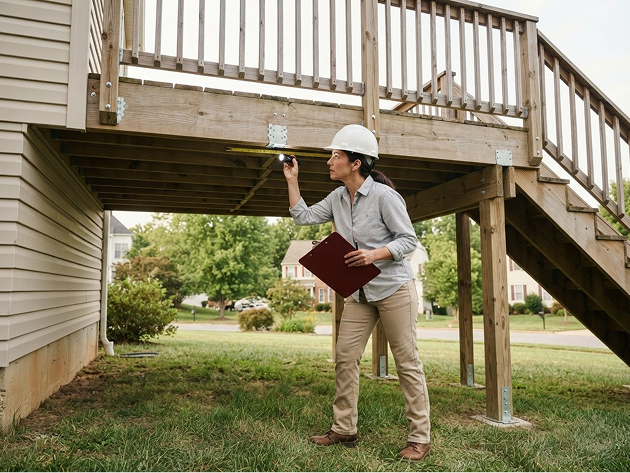
Deck failures in the United States occur predominantly at residential properties, and the leading structural cause is concealed deterioration or inadequate original construction in the connections and framing - conditions that are not visible from a casual inspection of the deck surface.
A Step in Time Structural Engineering provides independent residential deck inspections across Virginia, assessing the structural adequacy of all deck components and producing PE-stamped engineering reports that document conditions accurately for homeowners, contractors, and building officials.
What a Residential Deck Inspection Covers
Ledger board connection
Framing and joists
We assess joist size, spacing, span, bearing conditions, and signs of deterioration, insect damage, or moisture compromise. Structural adequacy of the framing system determines the deck’s load capacity.
Posts and beams
Footings
Guardrails and handrails
Stairs and stringer connections
When to Schedule a Residential Deck Inspection
A professional deck inspection is particularly timely in these situations:
- The deck is 10 or more years old and has not been professionally inspected
- You are preparing for a large gathering and want the structural adequacy confirmed before heavy use
- You are buying or selling a property with a deck and want PE-stamped documentation of current conditions
- The deck shows visible soft spots, movement, or signs of wood deterioration
- A permit is required for deck modification, repair, or expansion
- A storm or impact event has affected the deck structure
What Makes Our Deck Inspections Different
Standard home inspections include a visual assessment of the deck. A structural engineering inspection specifically examines the elements that determine structural adequacy - connections, framing capacity, footing depth, and code compliance - in the technical depth that a general inspection does not reach.
The ledger board, in particular, is where most deck failures originate and where most general inspections have limited technical depth. Our assessment of the ledger connection is specific about fastener type, spacing, and compliance with IRC and Virginia code requirements.
FAQs
What does a residential deck inspection involve?
How often should a deck be professionally inspected?
Can your deck inspection report be used for a permit application in Virginia?
A residential deck inspection from a licensed structural engineer provides a level of technical assessment that a general home inspection does not reach. Call (848) 467-7328